-
반응형
🎒 How to Travel Korea for Less: My Real Experience
A Personal 10-Day Budget Travel Case Study From Seoul, Hongdae, and Everyday Local Stops
👇 See the actual prices, mistakes, and strategies that worked for me
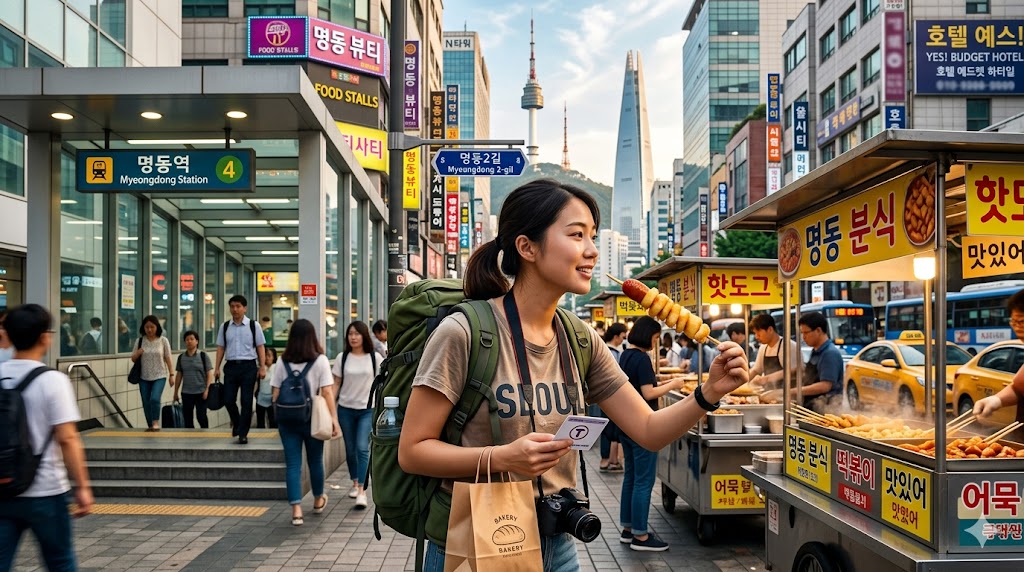
Budget travel in South Korea can be achievable with thoughtful planning, helping visitors experience local neighborhoods, food, and culture without automatically defaulting to tourist-area prices. 📍 My Korea Budget Travel Challenge (April 2026): I arrived in Seoul with a simple question: could I keep daily costs low without turning the trip into a survival exercise? A lot of “budget Korea” content online felt either unrealistic or outdated, so I decided to test it properly. I tracked receipts, compared neighborhoods, used public transport instead of taxis, mixed paid attractions with free ones, and tried to eat in places built for local demand rather than tourist traffic. Over that period, I averaged roughly ₩55,000 per day. That number will not suit every traveler, but it changed how I think about Korea. The country did not feel universally cheap. It felt strategically affordable once I stopped paying tourist-area prices for ordinary experiences.🧮 Calculate Your Own Korea Travel Savings💰 If you want to compare your own budget against this case study, the live calculator is the fastest next step
[ADSENSE - TOP]Why Korea Surprised Me in the Best Way
Before arriving, I expected Korea to feel expensive because most of the content I had seen focused on trend-heavy districts, famous cafés, polished hotel stays, and neatly packaged tourist itineraries. That version of Korea certainly exists. But I learned very quickly that it is only one version.
On my second day, I wandered out of a more familiar tourist zone and ended up in a neighborhood where prices looked completely different. A simple tteokbokki meal cost less than a trendy coffee. A filling bowl of local ramyeon was cheaper than the “budget breakfast” options I had seen online. Once I started comparing neighborhoods instead of landmarks, the country felt less like a premium destination and more like a place where planning style mattered more than people admit.
The pattern I noticed: Korea is not uniformly cheap, and it is not uniformly expensive either. The biggest gap often comes from location, timing, and habit. Tourist corridors can carry steep markups, while local neighborhoods just a few subway stops away can make the same trip feel far more manageable.[ADSENSE - HIGH RPM]My Actual 5-Day Budget Sample (Tracked From the Trip)
I did not want this to be another vague “you can totally do Korea cheaply” post, so I kept receipts and tracked my spending. The example below shows one 5-day sample from that travel period. It reflects the budget style I settled into once I stopped moving like a tourist and started making decisions more like a local-minded traveler.💰 Budget Sample: ₩275,000 (about $212) for 5 Days🛏️ Hostel (5 nights, Hongdae area)₩125,000🚇 Transport Pass (3-day Seoul pass)₩65,000🍜 Meals (5 days, mostly local spots)₩65,000🎫 Attractions (mix of paid and free)₩15,000☕ Coffee + snacks₩5,000TOTAL₩275,000 ($212)What those costs actually looked like: gimbap from a side-street shop for ₩4,000, ramyeon with egg and cheese for ₩6,500, convenience store food around ₩3,500, tteokbokki around ₩5,000, local coffee around ₩2,500, one free museum day, one free hike, low-cost subway travel, and a selective paid attraction instead of trying to “do everything.” What I deliberately skipped was just as important: heavily marked-up food streets, unnecessary taxi rides, and paid experiences that were less memorable than walking neighborhoods.[ADSENSE - HIGH RPM]Category by Category: What I Expected vs. What I Actually Paid
The table below compares a more tourist-style spending pattern with the personal budget pattern I actually followed. These numbers should be read as a planning comparison, not a promise that every traveler will hit the same daily average.
Category Tourist-Style Estimate My Actual Budget Pattern Case-Study Difference 🛏️ Accommodation Hotel: ₩150,000+/night Hostel: ₩25,000/night About ₩125,000/night 🍜 Breakfast Café set: ₩12,000 Gimbap shop: ₩4,000 About ₩8,000 🍱 Lunch Tourist restaurant: ₩25,000 Local ramyeon: ₩6,500 About ₩18,500 🍜 Dinner Tourist area meal: ₩30,000 Local bibimbap: ₩8,000 About ₩22,000 🚇 Transport Frequent taxis: ₩50,000/day Pass + subway use: ₩20,000/day avg About ₩30,000/day 🎫 Attractions Several paid stops: ₩75,000 Selective paid/free mix: ₩15,000 About ₩60,000 💰 DAILY AVERAGE Up to ₩310,000 About ₩55,000 Large gap in this travel style comparison What this comparison is really useful for: it shows whether your own trip is likely to behave more like a convenience-heavy tourist plan or a more disciplined local-style route. If you want to test your own numbers directly, the live calculator is the most practical next step.🧮 Try the Live Korea Travel Savings Calculator🧭 Use your own trip length, budget, and route pattern instead of relying only on my sample
🍜 Food Was My Biggest Money-Saving Discovery
The turning point for me: I exited a station in Hongdae and found a small restaurant with almost no English signage. I was honestly unsure whether I should go in. The menu was simple, the room was full of local diners, and it was obvious that nobody had designed the place for social media. I pointed at one item and got a huge, satisfying meal with sides for a price that completely reset my assumptions about food in Korea. That experience changed the rest of the trip. After that, I stopped choosing restaurants based on visibility and started choosing them based on who was actually eating there.🥘 Street Food Reality₩3,000-8,000Tteokbokki, kimbap rolls, hotteok, and other quick foods often felt far more budget-friendly outside the obvious tourist lanes. My cheapest meals were not “travel hacks.” They were just normal local prices.🍜 Local Restaurant Range₩6,000-12,000Small family-run places, soup shops, ramyeon counters, and bibimbap restaurants often gave me the best value. In my experience, simplicity usually correlated with better pricing.🍱 Convenience Store Backup₩3,000-8,000GS25 and CU were useful when I needed a fast meal or late snack. I would not base an entire trip on convenience-store food, but it did meaningfully reduce cost pressure on busy days.☕ Local Coffee Shops₩2,500-5,000Once I stopped defaulting to brand-name cafés in tourist areas, coffee became much more reasonable. Smaller neighborhood cafés often had lower prices and a calmer atmosphere anyway.What I stopped buying: expensive café stops in tourist districts, food streets that charged obvious markups, and fast-food meals that were neither memorable nor cheap. The most useful food rule I learned: areas around universities and residential neighborhoods were consistently better for value than famous shopping zones.🛏️ Accommodation: Where I Nearly Overspent
My near-mistake: my first searches pushed me toward Myeongdong and Gangnam, where prices quickly climbed into a range that would have broken the entire experiment. A Korean friend suggested looking at Hongdae and nearby budget-friendly districts instead. That advice changed everything. I ended up in a hostel that was dramatically cheaper than the central hotel options I had first seen, but also more social, more practical, and much closer to the type of trip I actually wanted.💰 Budget Options I Actually Considered
- Hostels: around ₩20,000-35,000/night in realistic searches
- Guesthouses: around ₩25,000-45,000/night
- Private rooms / budget stays: roughly ₩30,000-55,000/night outside premium cores
- Capsule-style stays: budget-friendly in some areas, though quality varied
🏆 Neighborhoods That Felt Better for Value
- Hongdae: better social atmosphere, useful food options, budget stays
- Dongdaemun: practical location with lower-cost accommodation in some searches
- Side streets beyond major hubs: often much better than obvious main-road listings
- Seasonality: off-peak timing generally looked much better than peak travel periods
The booking lesson: advance planning mattered more than I expected. The earlier prices I saw were meaningfully better than the last-minute ones other travelers mentioned. Accommodation was one category where procrastination felt expensive very quickly.💡 10 Budget Lessons From My Real Trip
These are not abstract tips copied from other guides. They are the decisions, observations, and corrections that changed my spending while I was actually in Korea.1Get Your Transport Setup EarlyThe faster I stopped paying one-off fares and moving inefficiently, the easier it became to control the rest of the budget.2Eat Where the Routine Is LocalThe meals that felt most normal for Korean students, workers, or families were usually much better value than the ones packaged for visitors.3Do Not Assume Visibility Means QualityThe most obvious places were often the most expensive. Some of the best-value food and stays were one or two streets away from the main path.4Free or Low-Cost Days MatterA small itinerary change can turn an ordinary paid stop into a free or lower-cost visit, especially for museums and cultural sites.5Walking Changed My SpendingWhenever I walked more and rushed less, I found cheaper food, better neighborhoods, and more memorable experiences.6Convenience Stores Are Useful, Not MagicalThey were a real backup tool for time and cost, but the best trip balance came from mixing them with neighborhood food, not replacing everything with them.7Use the Tax Refund System When It Actually AppliesIt mattered more on meaningful purchases than on small impulse spending. Keeping receipts organized made the system feel much less annoying.8Some Free Views Beat Paid OnesI often enjoyed public walks, hills, and neighborhood viewpoints more than paid observation-style attractions.9Ask Locals or Hostel StaffThe best small recommendations rarely came from broad online rankings. Short local suggestions often saved more money than hours of scrolling.10Do Not Let Tourist Areas Set Your BaselineOnce I stopped using the most famous districts as my price benchmark, Korea looked completely different.📊 In my own trip style, these choices reduced total spending meaningfully over the full 10-day period
[ADSENSE - HIGH CTR]📊 Korea Budget Travel Cost Comparison 2026
Daily travel cost in Korea can vary dramatically depending on whether someone follows a tourist-first itinerary or a more local-style route. In higher-spending scenarios, accommodation, restaurants, taxis, and premium attractions can push the daily total much higher than expected. In more disciplined budget scenarios, the same city can feel far more manageable.
From my own travel period, the biggest cost differences came from three things: neighborhood choice, food habits, and transport behavior. Tourist corridors tended to carry the strongest markups, while university-adjacent or residential areas often felt far closer to everyday local pricing.
Based on my documented experience, a carefully planned budget style in Korea can sometimes land around the ₩55,000-₩75,000/day range, while a more convenience-heavy or tourist-heavy pattern can move dramatically above that. Season, room type, shopping behavior, and city choice will change the outcome.
The key lesson is not that Korea is “cheap.” It is that Korea rewards travelers who compare geography, timing, and local demand patterns before they spend.
🧮 Run Your Own Korea Trip Estimate Before You Book📱 By this point you have seen my numbers — now test your own route, trip length, and daily budget with the live calculator
❓ Questions I Had, and What I Learned
Is street food actually safe in Korea?▼In my own experience, yes. I ate street food many times without issues. As with any destination, busier vendors and high-turnover stalls usually felt more reassuring than empty ones. I paid attention to freshness and lines rather than choosing randomly.
Are budget hostels in Korea actually clean?▼My stay was cleaner than I expected, but quality clearly varies. Reviews, dorm size, and neighborhood matter. Smaller places with consistently strong recent reviews looked more dependable than the cheapest possible options.
Can you really travel on around ₩50,000/day?▼My own average came close to that range, but it required discipline and a specific travel style. A slightly higher daily target usually gives more flexibility. The lower the budget, the more important neighborhood choice and routine food decisions become.
What felt least worth paying for?▼For me, the least efficient spending was often tourist-area food, taxi convenience, and premium attractions that added cost without creating a better memory. Some of my favorite experiences were inexpensive walks, low-cost meals, and neighborhood discoveries.
Is booking ahead worth it?▼In accommodation, yes. Early planning gave me noticeably better options than late searching. That difference mattered more than I expected and shaped the entire trip budget.
🚀 Turn These Lessons Into a Practical Korea Travel Plan📍 Best used after the calculator if you want route, neighborhood, transport, and planning guidance that feels practical in real life
[ADSENSE - BOTTOM]Disclaimer: Prices and examples in this article reflect one personal travel experience from April 2026 and should be read as a case study, not a guaranteed budget outcome. Actual costs vary by season, exchange rate, city, booking timing, room type, and spending habits. Always verify current prices before making reservations or purchases. This page is informational content only and is not financial advice.반응형'Global Career & Travel' 카테고리의 다른 글