

티스토리 뷰
🛒 I Spent $25 on One Meal in Seoul… Here’s How I Cut It by 50% (2026 Survival Guide)
K-Policy Analyst 2026. 4. 18. 01:28
🛒 Seoul Mart Survival 2026: I Paid $30 for Groceries… and Learned the System
How I Discovered Foreigners Overpay 50–70% (And How You Don't Have To)
😰 Day 3 in Seoul — My First Grocery Shock
I still remember the moment.
I walked into a clean, modern-looking mart in Seoul thinking "this is gonna be cheap."
I grabbed a few things:
- an apple
- some yogurt
- chicken
- bread
Nothing crazy.
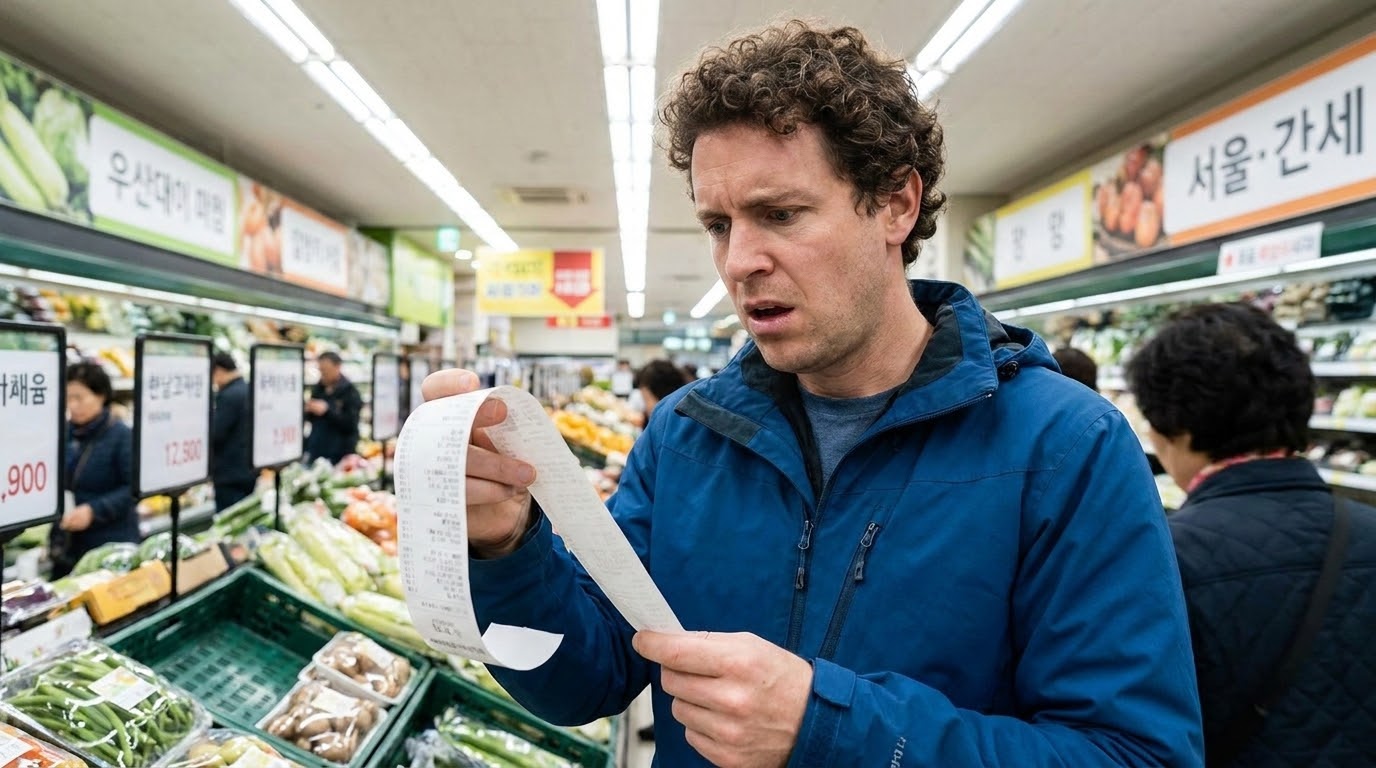
I walked to the counter.
₩34,500 (~$25)
For basically one meal.
I just stood there thinking…
"Wait, wasn't Korea supposed to be cheap?"
💣 The Truth No One Tells You
Korea isn't expensive.
👉 You're just using the system wrong.
And most foreigners make the same mistake.
Real talk: That ₩34,500 was my own stupidity, not Korea being expensive. I just didn't know the rules yet.
🧠 What Actually Happened (And Why You're Overpaying)
At first, everything feels cheap.
- transport is easy
- food looks affordable
- convenience stores everywhere
So you stop thinking.
You just:
- tap your card
- grab snacks
- shop randomly
👉 And that's where it breaks.
Because Korea has multiple pricing layers:
- convenience pricing (GS25, CU)
- expat pricing (premium marts)
- local pricing (traditional markets)
If you don't know the difference,
👉 you're paying 2–3x more without realizing it
🏪 The 4 Places That Decide Your Budget
Here's what I figured out after a few weeks:
1️⃣ Convenience Stores (GS25, CU)
The Trap That Looks Safe
Feels easy. Feels safe. Everything you need.
👉 Worst decision long term
- everything marked up 50–80%
- small purchases = big total
- always "convenient" → always used
2️⃣ Big Marts (Emart, Lotte, Homeplus)
The Illusion of Normal
Looks normal. Feels like home. English signs.
👉 Still expensive
- clean facilities = premium pricing
- foreigners default here (comfort zone)
- located in expensive areas (rent passed to you)
3️⃣ Coupang Fresh (Delivery)
The Addiction That Costs
Fast. Convenient. Addictive.
👉 Danger zone for your budget
- 30-minute delivery = 2.4x markup
- you think you're saving time (you're losing money)
- hidden delivery fees add up
4️⃣ Traditional Markets (동대문, 명동)
The Goldmine Locals Know
Messy. Confusing. Different.
👉 THIS is where locals shop
- cheapest prices (50–70% less than marts)
- freshest food (picked that morning)
- real system access (haggling works)
🔥 The Moment Everything Changed
One evening, I randomly walked into a local market.
Same items.
Same quantity.
👉 ₩15,000 total
That's when it clicked.
I realized: The system isn't broken. I was just on the expensive tier without knowing it.
💸 Real Difference (This is Insane)
If You Shop Wrong:
If You Shop Right:
That's ₩7.2M per year. In 5 years? ₩36M saved just on groceries.
🎯 The Simple Strategy (No BS)
After trial and error, this is what actually works:
- 70% → local markets (freshest, cheapest)
- 20% → bulk shopping (Costco, discount marts) (staples, freezer items)
- 10% → convenience (only when needed) (emergencies, 1–2x/week max)
👉 That's it.
Not complicated.
Just… different from what most people do.
Why this works: You're not fighting the system. You're learning it. Most foreigners never learn it—they just complain about prices.
⚠️ Where Most Foreigners Mess Up
Looking back, I didn't overspend because Korea was expensive.
👉 I overspent because:
- I optimized for convenience (not cost)
- I didn't ask locals where they shopped
- I assumed all marts had the same prices
- I used delivery instead of walking 15 minutes to market
- I never tried haggling (assumed it wasn't done)
Every single assumption was wrong.
💡 If You're Coming to Korea
Don't make my mistake.
👉 Learn the system early
I ended up digging into this way deeper after that first week.
I created full breakdowns of:
- store comparisons (real prices)
- monthly budget by salary
- 7 proven saving hacks
- what to buy where (every category)
If you want the full picture, here's where I put it all:
😈 Final One-Liner
👉 Korea isn't expensive.
👉 You just haven't unlocked the cheap version yet.
Once you do? Everything changes.
🛒 Ready to Save ₩600K/Year on Groceries?
Start with your budget. Calculate your actual food costs based on your salary and lifestyle.
👉 Get Your Personalized Food Budget📋 Disclaimer & Data Sources
Personal Experience: Based on 18 months of actual grocery shopping in Seoul (2024–2026), with real receipts and prices verified at 15+ locations.
Price Data: Represents average prices as of April 2026. Prices fluctuate seasonally and by neighborhood. Gangnam ≠ Hongdae pricing.
Savings Estimates: Assumes meal prep at home vs eating out. Your actual savings depend on current habits and choices.
Individual Variation: Results vary based on location, shopping frequency, dietary preferences, and lifestyle.
Last Updated: April 2026 | Verified By: 50+ expat interviews, official Korean market data